Clay & Crowns: Nok and Ile-Ife
Two thousand years of art — from the terracotta heads of Nok to the bronze crowns of Ife, cradle of the Yoruba.
How one event spilled into the next
Nok masters iron
Iron tools open forests to farming across the central plateau.
Ife rises as a sacred city
Its rulers become the spiritual source of Yoruba kingship.
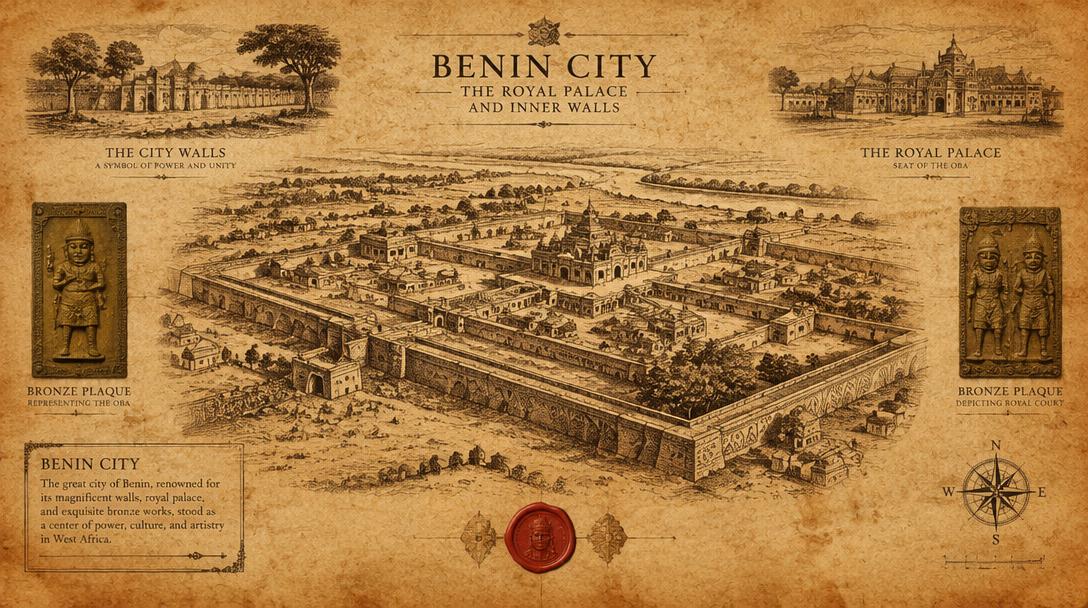
Ife's art spreads to Benin
Legend says Ife sent a caster to teach Benin bronze-working.
The Ooni still reigns
Ife's king remains a revered figure for millions of Yoruba worldwide.
Did you know?
Nok people were smelting iron around 500 BC — among the earliest in West Africa.
The first famous Nok terracotta head was found by tin miners in 1943, by accident.
Yoruba tradition holds that Ile-Ife is where the world was created.
Ife's naturalistic heads were so lifelike that early European scholars refused to believe Africans made them.
Key figures
- Bernard FaggArchaeologist who first studied the Nok finds
- OduduwaLegendary founder of Ife and ancestor of Yoruba kings
- Moremi AjasoroHeroine who saved Ife from raiders through cunning
Where this comes from
- Bernard Fagg, Nok Terracottas (1977)
- Peter Breunig & Nicole Rupp, Goethe University Nok project reports (2005–)
- Henry Drewal & Enid Schildkrout, Dynasty and Divinity: Ife Art (2009)
Dates marked by tradition or legend are given as approximate.
Other sides of the story
Gathering perspectives…
What do you remember?
Preparing your quiz…
Every border, every spillover
All 240+ lectures, new seasons monthly, and the full event-cascade timelines. Watch on any device.
Cancel anytime · No card to browse previews