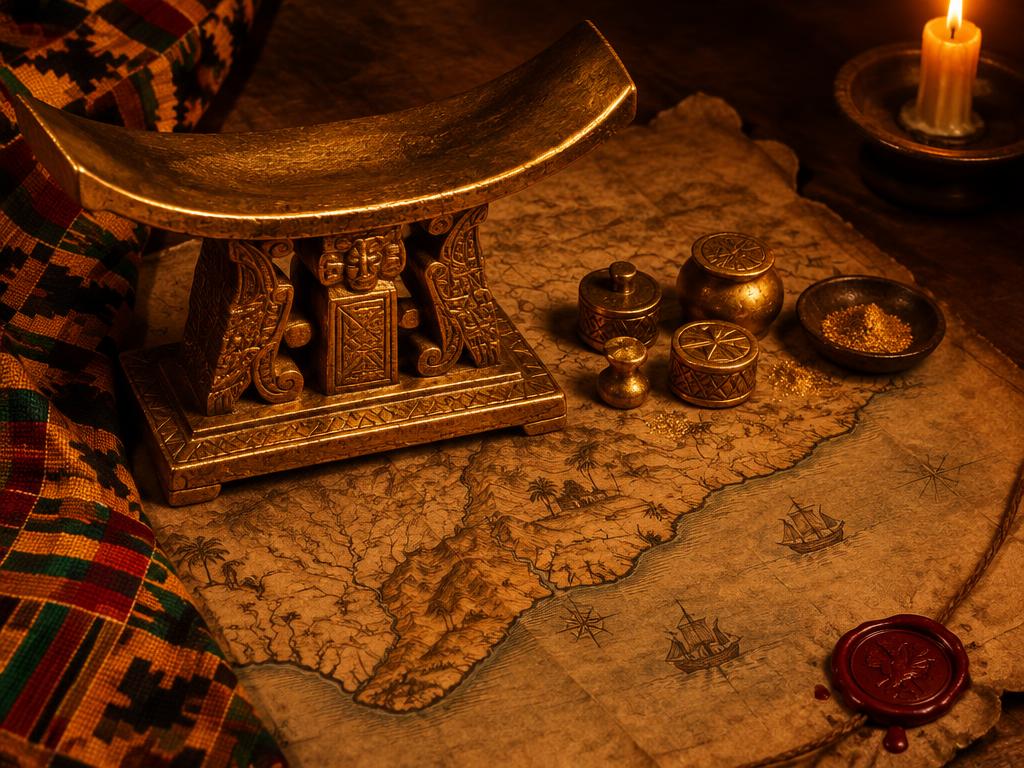
Gold, Stool & Freedom: From Ancient Ghana to Asante
The empire of gold that gave a modern nation its name, the Golden Stool no foreigner could sit on, and a landmark of African independence.
How one event spilled into the next
Wagadu weakens
Almoravid pressure and drought scatter the gold empire's power.
The Golden Stool descends
Asante unites around a sacred throne and defeats Denkyira.
War of the Golden Stool
Yaa Asantewaa's fighters hide the Stool; Britain never gets to sit on it.
Ghana goes free
The Gold Coast becomes Ghana — usually called the first black African colony to win independence from European rule.
A model and a spark
Ghana's freedom triggered a wave across Africa; the Asantehene still reigns in Kumasi.
Did you know?
Ancient Ghana (Wagadu) was not in modern Ghana at all — it lay in today's Mali and Mauritania; Nkrumah borrowed the name.
Arab writers said Ghana's king tied his horses to a gold nugget weighing about 30 pounds.
Asante believes the Golden Stool came down from the sky in 1701 and holds the soul of the nation; no one may sit on it.
Queen Mother Yaa Asantewaa led the 1900 War of the Golden Stool when a British governor demanded to sit on it.
Key figures
- Osei Tutu & Okomfo AnokyeFounded Asante with the Golden Stool
- Yaa AsantewaaLed the 1900 war against Britain
- Kwame NkrumahLed Ghana to independence in 1957
Where this comes from
- Nehemia Levtzion, Ancient Ghana and Mali (1973)
- Ivor Wilks, Asante in the Nineteenth Century (1975)
- Kwame Nkrumah, Ghana: Autobiography (1957)
Dates marked by tradition or legend are given as approximate.
Other sides of the story
Gathering perspectives…
What do you remember?
Preparing your quiz…
Every border, every spillover
All 240+ lectures, new seasons monthly, and the full event-cascade timelines. Watch on any device.
Cancel anytime · No card to browse previews