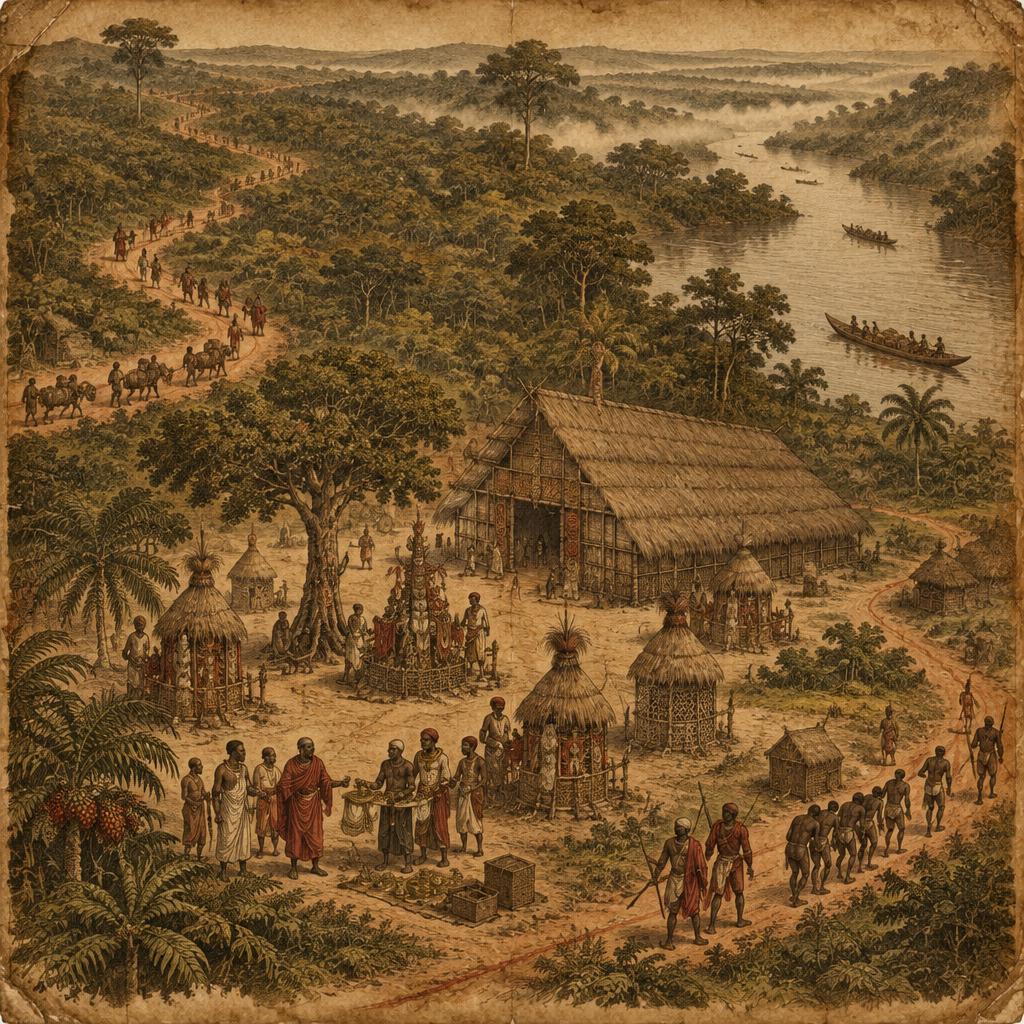
The Oracle's Roads: The Aro Confederacy
How a shrine at Arochukwu wired the south-east into a continental trade network — and why the British blew it up in 1901.
How one event spilled into the next
The Aro kingdom takes shape
Around this time Ibini Ukpabi's verdicts begin drawing petitioners from across the forest and riverine south-east.
Verdicts become a trade network
Aro agents open routes and satellite towns; captives, then palm oil, move toward the Bight of Biafra.
The British march on the oracle
The shrine is destroyed and the Anglo-Aro War begins, cracking the confederacy's grip on the interior.
The oracle's roads are trunk roads
Arochukwu still gathers pilgrims, and the old routes run beneath today's south-east highways.
Did you know?
The Ibini Ukpabi oracle at Arochukwu was consulted from the Niger to the Cross River; its verdicts could end a war or sell a person.
Aro agents founded settlements far from home — towns such as Arondizuogu and Ndikelionwu still carry the Aro name and ties.
When the slave trade was closed off, the same routes simply switched cargo to palm oil — and that is what drew the colonial courts.
British troops destroyed the shrine during the 1901–02 expedition; the war that followed opened the south-east to colonial rule.
Key figures
- NnachiPriest from Edda whose line, in Aro tradition, founded the kingdom
- Akpa alliesCross River fighters whose alliance helped found Arochukwu
- The Eze AroParamount Aro title that still speaks for Aro communities
Where this comes from
- Kenneth Dike & Felicia Ekejiuba, The Aro of South-eastern Nigeria, 1650–1980 (1990)
- Elizabeth Isichei, A History of the Igbo People (1976)
Dates marked by tradition or legend are given as approximate.
Other sides of the story
Gathering perspectives…
What do you remember?
Preparing your quiz…
Every border, every spillover
All 240+ lectures, new seasons monthly, and the full event-cascade timelines. Watch on any device.
Cancel anytime · No card to browse previews